
Dark doesn’t mean evil in Japanese naming culture. It means depth.
A name tied to shadow, night, or blood carries weight most “cute” names never touch. It feels ancient. It feels intentional.
If you’re naming a character, a pet, a username, or even a baby, dark Japanese names give you something most name lists can’t: mystery with meaning. Not random syllables slapped together for aesthetic points.
This list covers dark male Japanese names, Japanese names for darkness, names that literally mean dark, goth-leaning picks, and surname options too. Every name here comes with context, not just a translation dump.
Let’s get into it.
Dark Male Japanese Names
These lean masculine, sharp, and often tied to night, blood, or the underworld. A few double as popular anime character names, which is exactly why they hit different.
- Akuma – Literally means “demon.” Bold, unapologetic, not for the faint of heart.
- Yami – Means “darkness” itself. Simple, direct, heavy.
- Kage – Translates to “shadow.” Quiet, sharp, mysterious.
- Ryuu – Means “dragon.” Powerful with a mythic edge.
- Shinigami – “Death god.” Straight out of folklore and manga alike.
- Kuro – Means “black.” Minimal but loaded with meaning.
- Raiden – “Thunder and lightning.” Aggressive, cinematic energy.
- Hiroku – Ties to hidden or concealed things. Secretive undertone.
- Susumu – Historically linked with advancing through darkness or hardship.
- Tsukiyo – Means “moonlit night.” Dark but poetic.
- Kurayami – A direct word for “darkness” or “gloom.”
- Akutagawa – A surname turned first-name pick, tied to literary darkness (Ryunosuke Akutagawa).
- Ankoku – Formal word for “darkness” or “blackness.”
- Getsuei – Means “moon shadow.” Quiet menace.
- Yoru – Simply means “night.” Short, punchy, dark.
- Kurai – Adjective form of “dark” or “gloomy.”
- Shikkoku – Means “jet black,” deeper than regular kuro.
- Doku – Translates to “poison.” Blunt and unsettling.
- Zetsubou – Means “despair.” Heavy, dramatic, unforgettable.
- Kurokage – A blended name combining “black” and “shadow.”
- Enma – Named after the Buddhist king of hell. Not subtle.
- Hakai – Means “destruction.” Villain-coded by design.
- Kessen – Loosely tied to “decisive, deadly battle.”
- Chi – Means “blood.” One syllable, maximum impact.
- Akashi – Can tie to “proof of blood” depending on kanji used.
- Reiki – Refers to spirit energy, sometimes tied to death rites depending on kanji.
- Muyou – Means “useless” or “void,” often used for tragic antihero characters.
- Kurotsuki – A combo meaning “black moon.”
- Shi – A single syllable meaning “death.” Extremely minimal, extremely dark.
- Ryoku – Ties to “dark green” or shadowed forest imagery in some readings.
- Kuroi Ryuu – “Black dragon” as a full stylized name.
- Fukurou – Means “owl,” often symbolic of night and death omens.
- Yamikaze – Means “dark wind.” Great for a mysterious character.
- Yoake Nashi – Poetic phrase meaning “no dawn,” implying endless night.
- Karasu – Means “crow.” A classic dark omen bird in Japanese folklore.
- Ma – A prefix meaning “evil” or “demon,” used in compound names.
- Akki – Means “evil spirit” or “devil.” Sharp and rare.
- Yamiyo – Translates to “moonless, dark night.”
- Kuroyoru – Another “black night” variation, softer sounding than Kurayami.
- Genma – Ties to “mysterious demon” in some readings, popular in fiction.
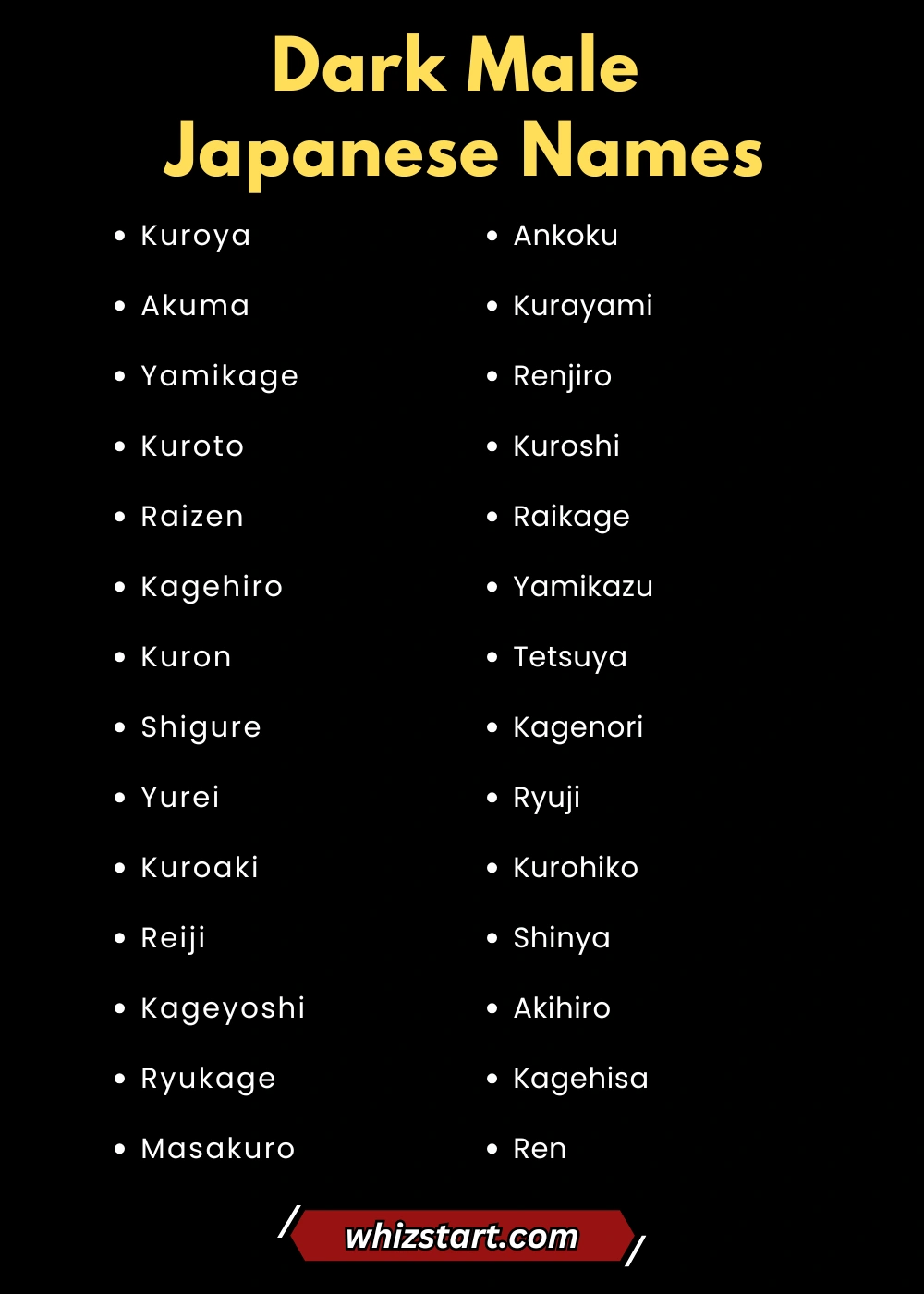
Japanese Names For Darkness
This section is built around names that directly translate to or reference darkness, dusk, or the absence of light. Great if you want the meaning to be unmistakable.
- Yamikage – “Shadow of darkness.” Doubles down on the theme.
- Ankokuji – Ties to “dark temple,” heavy and atmospheric.
- Kurayo – Means “dark world” or “dark generation.”
- Meiya – Refers to “dark night” using classical kanji.
- Kokuan – Formal term for “darkness” or “blackness,” used in older texts.
- Yamigumo – Means “dark clouds.” Moody and visual.
- Reiyami – A blend of “spirit” and “darkness.”
- Kurotoki – Means “dark time” or “black hour.”
- Yorumichi – Translates to “night road,” implying a path through darkness.
- Kurayozora – Means “dark night sky.” Long but strikingly visual.
- Ankokuyoru – “Dark night” in its most formal form.
- Meiankai – Ties to the boundary between light and dark, “twilight zone” energy.
- Yamihime – Means “dark princess.” Popular for female villain characters too.
- Kuroyume – Translates to “black dream,” eerie and poetic.
- Yamioto – Means “sound of darkness,” abstract but evocative.
- Kurashizumu – Loosely means “sinking into darkness.”
- Meikai – Refers to the “underworld” or “realm of darkness.”
- Yamitsuki – Means “dark moon,” similar to Kurotsuki but softer.
- Kokuya – Ties to “black night” using classical readings.
- Ankokuten – Means “dark heavens” or “dark sky.”
- Yamiakuma – A stacked name meaning “demon of darkness.”
- Kurayoake – Means “dark dawn,” a contradiction used for dramatic effect.
- Meiankoku – Formal double emphasis on darkness and gloom.
- Yamizora – Translates to “dark sky.”
- Kurokumo – Means “black cloud.”
- Ankokuō – Means “dark king,” often used for villain roles.
- Yamigami – Means “god of darkness.”
- Kuroyoake – A variation meaning “black dawn.”
- Meiyakage – Combines “dark night” and “shadow.”
- Yamimusume – Means “daughter of darkness.”
- Kurayamikai – Ties to “world of darkness.”
- Ankokuyume – Means “dark dream.”
- Yamitou – Refers to a “tower of darkness,” great for fantasy settings.
- Kokuyoru – Another formal reading for “black night.”
- Meiakuryuu – Means “evil dragon of darkness.”
- Yamikoe – Translates to “voice of darkness.”
- Kurayamihi – Means “flame of darkness,” contradictory and striking.
- Ankokuko – Means “child of darkness.”
- Yamishinwa – Ties to “dark myth” or “dark legend.”
- Meiyakou – Means “walker of the dark night.”
Read also:
200+ Good COC Names That Actually Sound Badass (Not Cringe)
200+ Karate Dojo Names: Cool, Japanese & Creative Ideas
50+ Funny Blooket Names to Make Your Classmates Laugh
Anime Attack Names: 190+ Cool Attack Names for Inspiration
Japanese Names Meaning Dark
These names use kanji that translate literally to “dark” as an adjective, not just night or shadow-adjacent words. Cleaner, more direct picks.
- Kurai – The base adjective for “dark.” Simple and clear.
- Kurou – A masculine name built from the “dark” kanji.
- Kurumi – Sounds soft but can carry a dark-toned kanji variation meaning “dark beauty.”
- Kurato – Combines “dark” with a strong masculine ending.
- Kurane – A softer feminine take meaning “dark sound” or “dark tone.”
- Kuroto – Popular real-life name meaning “black person” or “dark one.”
- Kurea – A modern-feeling name built around the dark kanji root.
- Kuronosuke – A classic-sounding samurai-era name meaning “dark helper.”
- Kuroha – Means “dark leaf” or “dark feather.”
- Kurono – Means “dark field,” calm but shadowed.
- Kuroto Ren – A combo name meaning “dark, connected soul.”
- Kuragari – Direct noun form of “darkness” or “gloom.”
- Kuroi Tsuki – Means “dark moon” as a full phrase-name.
- Kuranosuke – Historical-sounding name tied to “dark helper” or “guardian of darkness.”
- Kuroshi – Combines “dark” and “death” kanji for maximum weight.
- Kurotaka – Means “dark hawk.”
- Kuroyuki – Translates to “dark snow,” a striking contradiction.
- Kurofuji – Means “dark wisteria,” dark with a floral twist.
- Kuromitsu – Means “dark honey” or “dark light,” depending on kanji.
- Kuroame – Translates to “dark rain.”
- Kuroshiba – Means “dark grass” or “dark turf.”
- Kuroyama – Means “dark mountain.”
- Kuroumi – Translates to “dark sea.”
- Kurosawa – Well-known surname meaning “dark marsh,” made famous by director Akira Kurosawa.
- Kuronaga – Means “dark and long-lasting.”
- Kurotani – Means “dark valley.”
- Kuroe – A softer feminine name meaning “dark inlet” or “dark bay.”
- Kurohime – Means “dark princess.”
- Kurotora – Translates to “dark tiger.”
- Kuroken – Means “dark sword,” strong for a male character name.
- Kuroshina – Means “dark quality” or “dark nature.”
- Kurono Sora – A phrase-name meaning “dark field sky.”
- Kuroshichi – A classical-sounding name meaning “dark seventh,” historically used for sons.
- Kuroaki – Means “dark autumn.”
- Kuroharu – Translates to “dark spring,” a striking seasonal contrast.
- Kurofuyu – Means “dark winter.”
- Kuronatsu – Means “dark summer.”
- Kuroumaru – A classical boy’s name meaning “dark circle” or “dark perfection.”
- Kuroshige – Means “dark abundance” or “dark growth.”
- Kuroyoshi – Translates to “dark good fortune,” an intentional contradiction.
Goth Japanese Names
Not all of these are traditional. Some are modern picks pulled from J-fashion and gothic Lolita culture, where dark aesthetics and Japanese naming style collide.
- Rozen – A Japanese-gothic hybrid name inspired by rose and dark romanticism.
- Vania – Popularized in gothic anime and visual-kei culture.
- Reika – Means “cold flower,” a classic gothic-Lolita favorite.
- Yuuki – Can mean “gentle princess” or “dark snow” depending on kanji, dual-toned by design.
- Suzumiya – A surname-style name with a haunting, elegant sound.
- Rurika – Means “lapis lazuli,” often used for deep-blue, night-toned characters.
- Kanade – Means “melody,” frequently used in melancholic gothic character writing.
- Ciel – Not native Japanese, but heavily adopted in J-gothic fiction for its dark elegance.
- Mizuki – Means “beautiful moon,” a staple in dark-romantic naming.
- Ravencrow – A stylized, Western-influenced name used in Japanese gothic fan culture.
- Kurenai – Means “crimson,” a strong goth-red aesthetic pick.
- Shirayuki – Means “white snow,” used for pale, ghost-like gothic characters.
- Rein – A stylish, minimal name popular in visual-kei and gothic branding.
- Tsukihime – Means “moon princess,” iconic in dark visual novel culture.
- Kuroshitsuji – Not a first name, but the aesthetic term (“black butler”) often inspires gothic name picks.
- Elzeria – A fantasy-Japanese blend common in gothic Lolita branding.
- Ayakashi – Refers to supernatural apparitions, used stylistically as a dark, elegant name.
- Noire – French-influenced but widely used in J-gothic fashion branding.
- Rozalind – A stylized hybrid name for gothic Lolita personas.
- Kyouka – Means “mirror flower,” eerie and elegant.
- Sakuya – Means “blooming night,” soft yet shadowed.
- Hakuei – Means “white shadow,” a contrast-driven gothic pick.
- Vlarose – A fantasy hybrid used in dark J-fashion circles.
- Yozora – Means “night sky,” a favorite for gothic aesthetic accounts.
- Amaterasu no Kage – Means “shadow of the sun goddess,” dramatic and layered.
- Rinne – Means “cycle of reincarnation,” tied to death and rebirth themes.
- Kokuyou – Means “obsidian,” sharp, dark, and elegant.
- Hisui – Means “jade,” used for deep, cold-toned gothic characters.
- Yamibara – Means “dark rose,” a favorite in gothic Lolita naming.
- Reimei – Ironically means “dawn,” used to contrast dark character arcs.
- Kurotsubaki – Means “black camellia,” a funeral flower with heavy symbolism.
- Meiou – Means “ruler of darkness” or references Pluto, the underworld planet.
- Shikigami – Refers to spirit servants in onmyodo folklore, often used stylistically.
- Rozaria – A stylized, elegant hybrid popular in gothic character design.
- Tsukuyomi – The Shinto god of the moon and night, heavily used in dark fiction.
- Kuronue – A folklore-tied name meaning “black weasel spirit.”
- Hakushi – Means “white death” or “blank death,” depending on kanji.
- Yamibato – Means “dark dove,” a soft-dark contrast name.
- Rozukuro – A stylized blend meaning “black rose.”
- Meikyou – Means “dark mirror,” poetic and eerie.
Dark Last Names Japanese
Surnames carry weight in Japanese culture. These translate to dark, shadowed, or death-adjacent meanings and work well for characters or brand names needing gravitas.
- Kurosawa – Means “dark marsh.” Famous, respected, and moody.
- Kuroda – Translates to “black rice field.”
- Kuroki – Means “black tree.”
- Yamiya – Means “darkness house” or “dark shop.”
- Kurogane – Translates to “black iron,” strong and industrial-dark.
- Kurotani – Means “dark valley.”
- Ankokuji – Means “dark temple.”
- Kuroshima – Translates to “black island.”
- Yamikawa – Means “dark river.”
- Kuroiwa – Means “black rock.”
- Shinigawa – A stylized surname combining “death” and “river.”
- Kuromori – Translates to “black forest.”
- Yamimori – Means “dark forest,” a soft variation of the above.
- Kurohashi – Means “black bridge.”
- Meikai – As a surname, ties to “underworld realm.”
- Kurotsuka – Means “black mound” or “black grave marker.”
- Yamiguchi – Means “dark mouth” or “dark entrance.”
- Kuroyanagi – Translates to “black willow,” a real and elegant Japanese surname.
- Ankokuyama – Means “dark mountain.”
- Kurofune – Means “black ship,” historically tied to foreign warships in Japanese history.
- Yamizuka – Means “dark mound.”
- Kuroe – As a surname, means “black inlet.”
- Meikuro – A stylized reversal meaning “dark underworld.”
- Kurosaki – Means “black cape” or “black peninsula,” made iconic by pop culture use.
- Yamishita – Means “beneath the darkness.”
- Kuroyama – Means “black mountain.”
- Ankokutani – Means “dark valley,” a heavier version of Kurotani.
- Kuromiya – Means “black shrine.”
- Shikkokuji – Means “jet-black temple.”
- Kurosawagi – A stylized extension meaning “dark uproar,” dramatic for fiction.
- Yamikage – As a surname, means “shadow of darkness.”
- Kuroumi – Means “black sea” or “dark ocean.”
- Meikage – Means “dark shadow.”
- Kuronuma – Translates to “black swamp.”
- Ankokukawa – Means “dark river,” a formal cousin of Yamikawa.
- Kurotake – Means “black bamboo.”
- Yamitsuka – Means “dark burial mound.”
- Kuroshiro – Means “black castle.”
- Meiyama – Means “dark mountain,” a softer reading than Ankokuyama.
- Kurogawa – Means “black river.”
Why Dark Japanese Names Are Trending Right Now
Anime and manga are having a global moment, and shows built entirely around dark aesthetics, from shonen battle series to gothic isekai, are pulling in millions of new fans. Naming trends always follow fandom trends.
TikTok’s dark academia and gothic Lolita communities have also pushed Japanese-inspired naming into mainstream fashion and username culture, not just fiction writing.
There’s also a bigger cultural shift happening. People are moving away from overused Western baby and pet names and searching for something with actual meaning behind it, even if that meaning leans dark.
[VERIFY BEFORE PUBLISHING: specific search volume trend data or platform stats before publishing.]
What People Are Searching For
People rarely stop at “dark Japanese names.” Here’s what related searches usually look like, and why they matter for finding the right pick.
Japanese names that mean night often overlap with moon and shadow themes, since traditional Japanese poetry ties the two closely together.
Japanese boy names meaning dark tend to lean strong and short, built for characters or real names that need to hit hard without extra syllables.
Spooky Japanese names usually pull from yokai folklore, ghost stories, and Shinto spirit lore rather than direct translations.
Names that mean shadow in Japanese almost always use the kage kanji, one of the most flexible dark-themed characters in the language.
Japanese female names with dark meanings blend elegance with weight, favoring words like hime (princess) or yoru (night) over blunt terms.
Japanese names with dark meanings girl searches often overlap with gothic Lolita and visual-kei naming culture, not just traditional baby names.
Japanese names that mean blood are less common but show up often in character naming for anime, games, and dark fiction.
Japanese name for death searches usually lead to shi or shinigami, both heavily used in fiction but rarely in real-life naming.
Frequently Asked Questions
What is a good dark Japanese male name?
Kage, Yami, and Kurosaki are strong picks. They’re short, sharp, and carry real weight without needing extra explanation.
What Japanese name means shadow?
Kage is the most direct answer. It literally translates to “shadow” and shows up in tons of character and surname combinations.
Is it disrespectful to use dark Japanese names?
Not inherently. Just avoid stacking offensive or mocking kanji combinations, and don’t use real family surnames as costume names without thought.
What Japanese name means death?
Shi is the most literal translation. Shinigami, meaning “death god,” is the more stylized and commonly used version in fiction.
What’s a dark Japanese name for a girl?
Yamihime, meaning “dark princess,” and Kurenai, meaning “crimson,” are both strong, elegant picks with real depth.
Are dark Japanese names good for pets?
Yes, especially for black cats, dark-colored dogs, or reptiles. Kuro, meaning “black,” is a genuinely popular real-world pet name in Japan.
What Japanese surname means darkness?
Kurosawa, meaning “dark marsh,” is the most recognizable, thanks to legendary filmmaker Akira Kurosawa.
Final Thoughts
Dark Japanese names aren’t about shock value. They’re about depth, history, and meaning most trendy name lists skip entirely. Whether you’re naming a character, a pet, or building a username that actually means something, these picks give you weight without trying too hard. Which name from this list hit the hardest for you? Drop it in the comments.

Osama Mukhtar
I’ve been creating SEO-focused, user-first content since college, helping readers find practical information, ideas, and solutions through clear and engaging blog content. I’ve also worked with 5+ clients, helping improve their organic traffic by up to 10K monthly visits while strengthening trust and visibility among their audiences.
My specialty is creating unique and catchy business name ideas and slogans for brands and startups. I also create engaging captions, advertising copy, and other content designed to attract attention and connect with the right audience.