Quick answer: A DBA (“doing business as”) name is a registered name that a person or company uses for business instead of its legal name. For example, if Jane Smith runs a bakery called Sunrise Bakery, she files a DBA so she can legally trade, advertise and open a bank account as Sunrise Bakery. A DBA does not create a new company and does not protect your personal assets. It is also called an assumed name, fictitious business name or trade name.
What Is a DBA Name?
A DBA is simply a public record that connects a business name to the real owner behind it. Governments require it so customers, banks and courts can see who is actually running a business when the name on the sign is not the owner’s legal name.
Still choosing your DBA name? Get ideas with the free Business Name Generator, then check it with the Business Name Checker before you file.
Legal Name vs DBA Name
Your legal name is your own full name if you are a sole proprietor, or the exact name on your formation documents if you have an LLC or corporation (for example “Smith Ventures LLC”). Your DBA name is any other name you use with customers.
| Business owner | Legal name | DBA name |
|---|---|---|
| Sole proprietor | Jane Smith | Sunrise Bakery |
| Partnership | Khan & Lee | Metro Print House |
| LLC | Smith Ventures LLC | Corner Coffee |
| Corporation | Bright Path Inc. | BrightPath Tutoring |
Other Names for a DBA
Different states use different terms for the same thing. If you see any of these, they all mean a DBA:
- Assumed name (used in Texas, New York and many other states)
- Fictitious business name or fictitious name (California, Florida)
- Trade name (used by some states and by the IRS)
- Trading as (common wording in the UK and other countries)
Who Needs a DBA and Why?
You need a DBA whenever you do business under a name that is not your exact legal name. Here is how it works for each type of business, plus the real benefits and limits.
Sole Proprietors and Partnerships
If you are a freelancer or small business owner without an LLC, your business name is your own name by default. The moment you use a brand name like “Jane’s Cleaning Co.” on invoices, signs or a website, most states expect you to file a DBA.
LLCs and Corporations
An LLC or corporation already has a registered name. It only needs a DBA to trade under a different name, for example when one company runs several brands or shops.
Benefits of a DBA
- Brand freely: use a memorable name instead of your personal or formal company name.
- Business banking: banks usually ask for a DBA certificate to open an account in your business name.
- Look professional: customers trust a clear brand name on invoices and ads.
- Cheap and fast: filing usually costs far less than forming a new LLC.
- Several brands, one company: an LLC can file more than one DBA.
What a DBA Does Not Do
- It does not create a separate legal entity.
- It does not protect your personal assets from business debts or lawsuits.
- It does not give you nationwide rights to the name; that needs a trademark.
- It does not replace business licences or permits you may need.
How to Register a DBA (Step by Step)
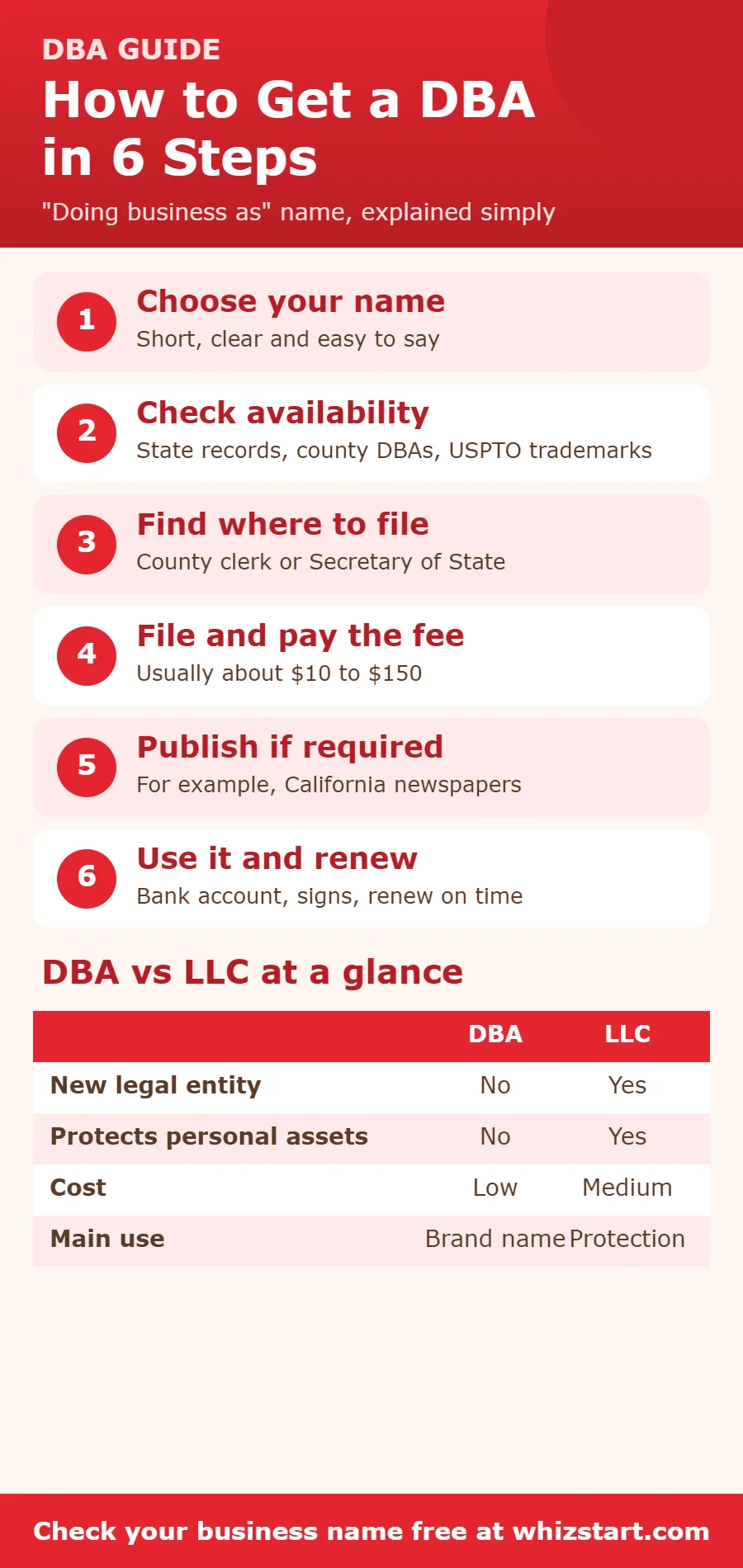
- Choose your name. Pick a name that fits your brand and is easy to say. Our free Business Name Generator can help.
- Check that it is available. Search your state business database, county DBA records and the USPTO trademark database. Our Business Name Checker does a quick first check.
- Find where to file. Sole proprietors usually file with the county clerk; LLCs and corporations often file with the Secretary of State. It varies by state.
- File the form and pay the fee. Complete the assumed name or fictitious business name form, online or on paper, and pay the filing fee.
- Publish a notice if required. A few states, such as California, require you to publish the DBA in a local newspaper.
- Use it and renew it. Open a bank account in the DBA name, update your signs and invoices, and renew before it expires.
Where to File a DBA: State Examples
Rules change often, so always confirm on your county or Secretary of State website before filing.
| State | What it is called | Where you file | Good to know |
|---|---|---|---|
| California | Fictitious Business Name (FBN) | County clerk in the county of your main office | Must be published in a local newspaper; expires after 5 years |
| Texas | Assumed Name Certificate | County clerk (sole proprietors and partnerships); Secretary of State (LLCs and corporations) | Entities may also need to file in the county |
| New York | Assumed Name / Business Certificate | County clerk (sole proprietors); Department of State (LLCs and corporations) | LLCs and corporations file a Certificate of Assumed Name |
| Florida | Fictitious Name | Division of Corporations (Sunbiz), statewide | Registration lasts 5 years |
How Much Does a DBA Cost?
Filing fees in most US states and counties fall roughly between $10 and $150. Extra costs can include newspaper publication (in states that require it), certified copies and renewal fees. Online filing services charge their own fee on top, but you can usually file yourself directly with the county or state.
DBA vs LLC vs Trademark
| Feature | DBA | LLC | Trademark |
|---|---|---|---|
| Creates a legal entity | No | Yes | No |
| Protects personal assets | No | Yes | No |
| Protects the name | Very limited, local | Within your state | Nationwide for your goods or services |
| Typical cost | Low | Medium | Higher |
| Best for | Using a brand name quickly | Protection and growth | Protecting a valuable brand |
Common DBA Mistakes to Avoid
- Using the name before filing. Some states can fine you, and banks may refuse your deposits.
- Not checking trademarks. A filed DBA will not protect you if another company owns the trademark.
- Adding LLC or Inc. to a DBA. You cannot use these endings unless the business is actually that entity.
- Forgetting to renew. An expired DBA can mean losing the name to someone else.
- Filing in the wrong place. County vs state filing depends on your business type and state.
FAQs About DBA Names
What Does DBA Mean in Business?
DBA stands for “doing business as”. It is a registered name a person or company uses for business that is different from its legal name, such as Jane Smith doing business as Sunrise Bakery.
Is a DBA the Same as an LLC?
No. An LLC is a legal business entity that can protect your personal assets. A DBA is only a name; it creates no new entity and gives no liability protection. An LLC can register a DBA to use extra brand names.
Do I Need a DBA If I Have an LLC?
Only if you want to trade under a name that is different from the LLC’s exact registered name. For example, Smith Ventures LLC needs a DBA to run a shop called Corner Coffee.
How Much Does a DBA Cost?
Most US states and counties charge somewhere between about $10 and $150 to file a DBA. Some places add newspaper publication costs, so check your county or Secretary of State website for the current fee.
How Long Does a DBA Last?
It depends on the state. Many DBAs must be renewed every five years (California and Florida are examples), while some states allow longer periods. Put your renewal date in your calendar so the name does not lapse.
Does a DBA Protect My Business Name?
Not fully. A DBA records that you use the name, but it does not stop someone in another county or state from using it. For stronger protection, form an entity with the name and consider a trademark.
Can I Open a Bank Account with a DBA?
Yes. Most banks let you open a business account in your DBA name if you show the filed DBA certificate along with your ID or your entity documents.
This guide is general information, not legal advice. DBA rules and fees vary by state and change over time, so check your county or Secretary of State website or speak with a qualified professional.
Related guides and tools:
- Free Business Name Checker
- Free Business Name Generator
- Holding company name ideas
- Trading company name ideas

Osama Mukhtar
I’ve been creating SEO-focused, user-first content since college, helping readers find practical information, ideas, and solutions through clear and engaging blog content. I’ve also worked with 5+ clients, helping improve their organic traffic by up to 10K monthly visits while strengthening trust and visibility among their audiences.
My specialty is creating unique and catchy business name ideas and slogans for brands and startups. I also create engaging captions, advertising copy, and other content designed to attract attention and connect with the right audience.