
Choosing the perfect werewolf name is crucial whether you’re writing a paranormal romance novel, developing a tabletop RPG character, designing video game content, or creating fantasy fiction. The right name captures the essence of your character—balancing human identity with primal, supernatural danger. A great werewolf name should be memorable, pronounceable, and reflective of the character’s personality and mythological heritage.
In this comprehensive guide, you’ll discover 100+ werewolf name ideas spanning mythological origins, modern interpretations, and completely original creations. We’ll explore naming conventions, deconstruct what makes certain names work brilliantly, and provide actionable strategies for creating your own unique werewolf characters. Whether you’re a seasoned worldbuilder or just starting your creative journey, this guide will help you find or craft the perfect name.
Werewolf Names Male
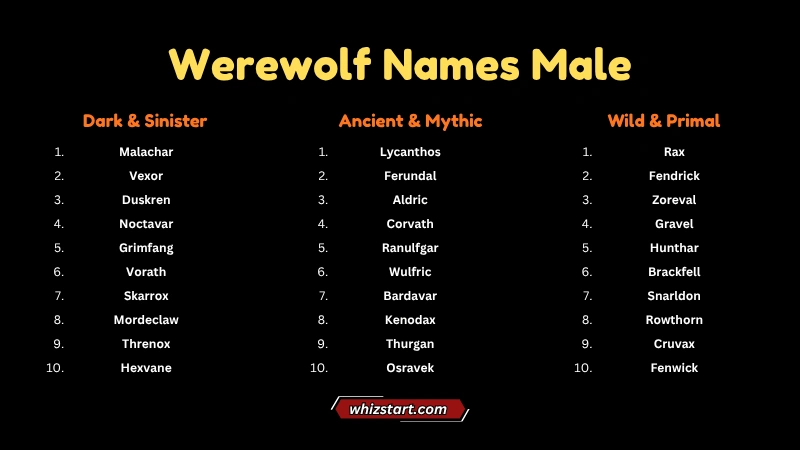
These names carry a sense of strength, danger, and old-world power. Each one was built to feel like it belongs to a werewolf who has lived through centuries.
- Arvok
- Dremhan
- Grythor
- Valdrus
- Sorvane
- Belkrath
- Thorvex
- Keldran
- Marvok
- Ulfren
- Zarthon
- Cravok
- Duskhen
- Halvorn
- Nighvrak
- Aeldur
- Brohtan
- Fenrath
- Gorveyn
- Jyrkon
- Orvath
- Prexon
- Rylvok
- Skaruth
- Talvren
- Urdrak
- Wolvahn
- Xethron
- Yedrask
- Zolvak
Werewolf Names
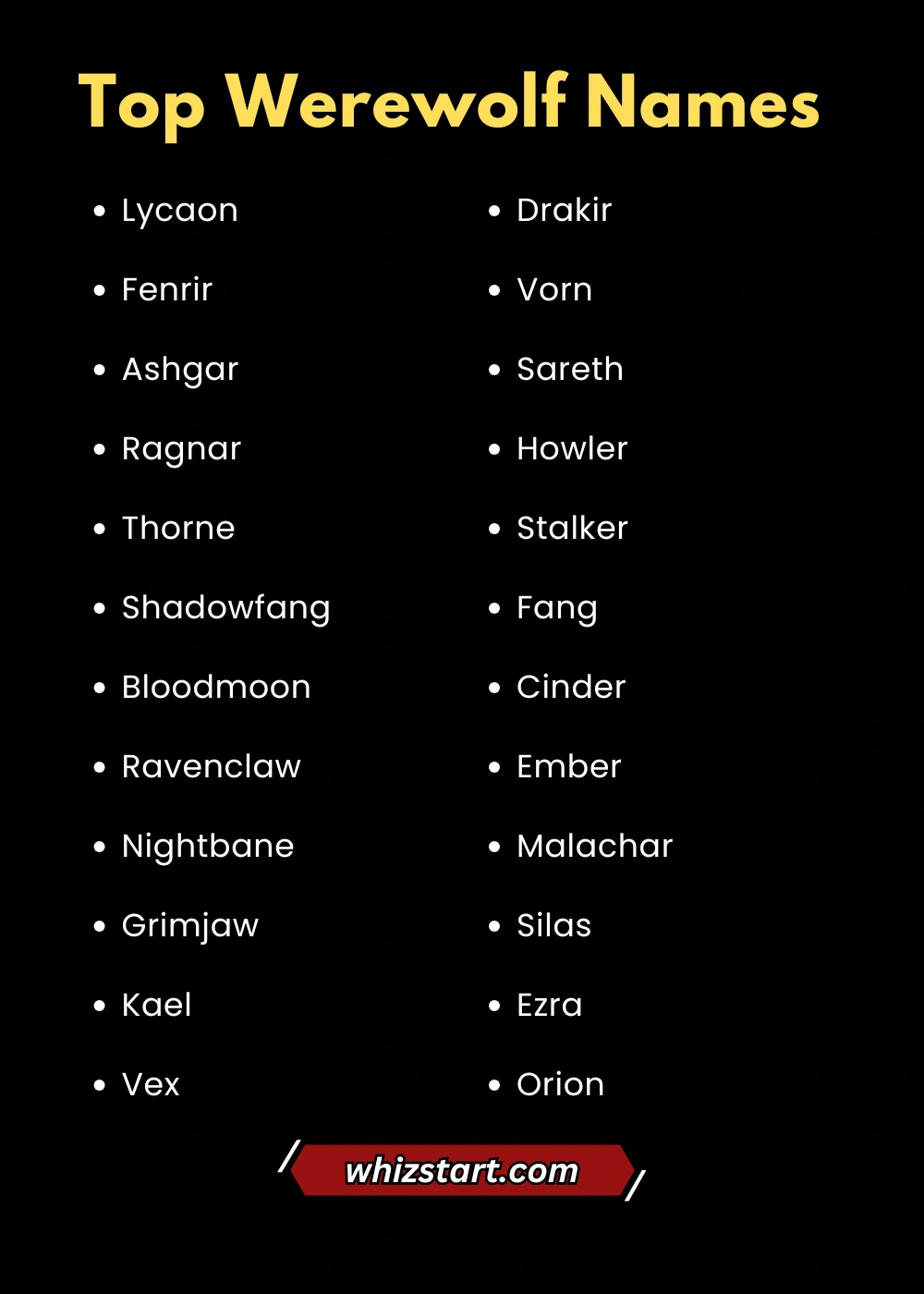
These are general werewolf names that work for any character regardless of gender or story setting. They feel mythic and timeless.
- Ashvorn
- Blakrath
- Cryveth
- Duskval
- Eryvon
- Fangrel
- Graveth
- Holvark
- Irenth
- Jorvak
- Kravorn
- Lunvrek
- Molvath
- Narvok
- Olvren
- Pethron
- Quorvak
- Ralveth
- Selvorn
- Trevash
- Ulvrek
- Vordun
- Wethrak
- Xolvath
- Yervak
- Zavorn
- Brenvak
- Coldrath
- Drevon
- Esthorn
Werewolf Names Girl
These names work perfectly for female werewolf characters. They mix mystery, strength, and a sense of something ancient and untameable.
- Sarvyth
- Lunara
- Vrethis
- Morvaine
- Duskella
- Halvira
- Nythara
- Ravelka
- Storryn
- Thyrvane
- Ulvessa
- Veldris
- Wrothyn
- Xalvira
- Yenvara
- Zelvine
- Ardena
- Belvrath
- Corvana
- Drelitha
- Esvorn
- Fyrvane
- Gothara
- Helvira
- Irvessa
- Jorvana
- Kravelle
- Lynvara
- Morvelka
- Nythvaine
Werewolf Names Female
A second dedicated list for female werewolf names, leaning into darker, more powerful sounds suited for alpha wolves and ancient bloodlines.
- Raeltha
- Sorvaine
- Thelvra
- Ulvanna
- Vaelris
- Wolvaine
- Xevara
- Yrvalka
- Zovaine
- Aldira
- Brelvra
- Cryvaine
- Dralvira
- Ersvane
- Fenvelka
- Gorthira
- Halvaine
- Irelvra
- Jarvaine
- Kolvira
- Lythvane
- Morvaine
- Nalvira
- Orvaine
- Phelrith
- Quelthira
- Ryvaine
- Selvira
- Thalvane
- Urvaine
Werewolf Boy Names
These werewolf boy names work great for younger characters, coming-of-age stories, or any werewolf who is just discovering what they are.
- Ashkron
- Borvel
- Creston
- Dravon
- Elkrath
- Fenvok
- Greston
- Halvok
- Inkrath
- Jorvon
- Krelton
- Lorvan
- Morvel
- Nelvok
- Orston
- Prevok
- Quelvan
- Relvok
- Stalvon
- Trevok
- Ulvon
- Velkon
- Worvan
- Xelvok
- Yarkon
- Zelvon
- Brykan
- Colvok
- Dreston
- Edvon
Male Werewolf Names
A second expanded list of male werewolf names with a heavier, more battle-worn feel. These suit warriors, pack leaders, and ancient cursed wolves.
- Ragvorn
- Solvath
- Threxon
- Ulvrak
- Varken
- Wolvrath
- Xervon
- Yarvak
- Zorvan
- Auldrath
- Braxon
- Carvok
- Dolvrath
- Erlvon
- Falvrak
- Gervok
- Heldrak
- Irvon
- Jervath
- Korvak
- Laldrath
- Morkan
- Nalvok
- Olvrath
- Perdrak
- Quelrak
- Rolvath
- Saldrak
- Tarvok
- Urgvath
Cool Werewolf Names
Cool werewolf names tend to have a sharp, modern edge while still sounding like they belong to something supernatural. These work well for games, comics, and urban fantasy.
- Noctrel
- Vexorn
- Grimvak
- Sharkon
- Dredvak
- Phanton
- Ravok
- Stithor
- Hexvorn
- Blaxon
- Scarvak
- Gloomvak
- Steelvorn
- Havok
- Razorn
- Darkvel
- Snarkon
- Fangren
- Bloodvak
- Coldvorn
- Emberon
- Ashvak
- Ironvorn
- Duskrak
- Voidvak
- Frosthorn
- Nightrak
- Gravorn
- Thornvak
- Wolfrak
Good Names for a Werewolf
These are some of the most versatile picks, the kind of names that sound great whether you are naming a hero, a villain, or something in between. If you are also exploring names for other mythical creatures in your world, you might find inspiration in our list of shapeshifter names for similar dark fantasy ideas.
- Halvrak
- Thornden
- Grayvok
- Lunvath
- Fendrake
- Molvek
- Darkvorn
- Starkvak
- Grevorn
- Ashkrath
- Ironfang
- Holvrath
- Coldvrak
- Duskvorn
- Ravvath
- Nightvak
- Stonvorn
- Blodvrak
- Silvrath
- Swiftvorn
- Grimrath
- Shadvak
- Frostrak
- Embervorn
- Steelvak
- Flinthrak
- Oakvorn
- Clawrak
- Moonvath
- Bonvrak
Werewolf Family Names
Werewolf family names work as surnames or clan names. They give packs a sense of history and bloodline. According to folklore scholars, werewolf legends often centered on hereditary curses passed through family lines, which is part of why a strong family name carries so much weight in werewolf mythology.
- Duskvarren
- Holdfang
- Nighclaw
- Ashmoor
- Stonefell
- Grimvorne
- Bloodmarch
- Darkhowl
- Frostmane
- Ironveil
- Moonbrath
- Ravenclaw
- Shadowmere
- Thornfell
- Coldmarch
- Emberveil
- Fenbrood
- Greymantle
- Halvorne
- Ironbrood
- Jorvaine
- Keldmarch
- Lunvorre
- Morkveil
- Nightbrath
- Oakmane
- Pethdark
- Quelveil
- Ravenbrood
- Stonehowl
Different Names for Werewolves
Not every werewolf story uses the word “werewolf.” These alternative names and titles refer to the same creature but carry their own flavor. If you enjoy naming mythical creatures, check out our collection of dragon names for more dark fantasy inspiration.
- Lykanthor
- Moonwalker
- Nightchanger
- Fullshifter
- Lunavex
- Wolfkin
- Beastblood
- Greyturner
- Moonborn
- Shadowshifter
- Fenwalker
- Darkturner
- Lunarkin
- Wolfbane
- Skymane
- Moonwraith
- Packborn
- Starhowler
- Runwolf
- Nightmane
- Cursedkin
- Moonstalker
- Bloodturner
- Ironhide
- Greypelt
- Moonstrider
- Wildturner
- Fangborn
- Darkhowler
- Halfmane
How to Create Your Own Werewolf Name
Step 1: Choose a Naming Foundation
Before you start inventing, decide on your foundation. What cultural tradition will inform your name? Do you want Norse mythology vibes (Fenrir, Ragnar), Celtic mystique (Faoladh, Ronan), Germanic strength (Wolfram, Aldwyn), or modern edge (Ash, Kane)? Will your character be from a specific geographic region within your fictional world?
Also consider the tone: Does your werewolf sound fierce and primal (Malachai, Gharath) or mysterious and noble (Lucian, Aurora)? Is this a paranormal romance character who needs to be attractive (Caleb, Sienna) or a dark fantasy antagonist (Noxian, Cassandra)?
Step 2: Combine Meaningful Elements
Names work best when they layer meaning. Use strong consonants that feel powerful when spoken aloud. For example, ‘Fennox’ combines Fenrir (Norse werewolf mythology) with a fox-like quality and a strong -ox ending. ‘Kaelith’ blends ‘Kael’ (meaning warrior in some fantasy contexts) with the ethereal -ith suffix.
Experiment with phonetic roots related to strength (Raf-, Thal-), darkness (Nox-, Umbr-), and wildness (Fen-, Lyc-). These roots feel natural to the fantasy genre while remaining distinct.
Step 3: Test for Memorability
Say the name aloud multiple times. Does it feel powerful? Does it roll off your tongue smoothly or does it stumble? Ask friends to read the name and try pronouncing it—their instinctive pronunciation matters. Check for unintended meanings, embarrassing acronyms, or unfortunate associations that might undermine your character.
Verify the name isn’t already famous or copyrighted. While you can be inspired by existing werewolf character names (like Remus Lupin or Jacob Black), your creation should be distinct enough to feel original.
Step 4: Layer in Mythology or Meaning
Research historical, mythological, or linguistic connections to add depth. For instance, Aldwyn (Old English ‘ancient friend’) works perfectly for a noble werewolf character. Lucian (from Latin ‘lux,’ light) creates ironic depth for a dark character. Add subtle symbolic connections to your character’s arc—transformation, darkness, predatory instinct, moon phases, or elemental associations.
Werewolf Names by Setting & Genre
Urban Fantasy Werewolf Names
Urban fantasy thrives on blending contemporary reality with supernatural elements. Names like Marcus, Ethan, Sienna, and Riley work perfectly because they feel grounded in modern day while carrying primal undertones. The werewolf could be your neighbor, your coworker, or the person you meet at a coffee shop. This genre works best with recognizable, pronounceable names that don’t scream ‘fantasy.’
Epic Fantasy Werewolf Names
Epic fantasy allows for more invention and spectacle. Names like Thalassor, Vex’andiel, and Kaelith sound grand and legendary. You can use more unconventional phonetics, add apostrophes if your world uses them, and create completely fantastical names that would never exist in the real world. The priority shifts from realism to epic resonance.
Paranormal Romance Werewolf Names
Paranormal romance demands names that balance danger with attractiveness. Ash, Caleb, Raven, and Kai all work because they’re edgy and memorable while remaining approachable. These names appeal to both the romantic and primal instincts of the reader. They often have a one or two-syllable punch that feels direct and sensual.
Video Game & RPG Werewolf Names
Gaming names must be memorable, easily typeable, and distinct from other player characters and NPCs. Aldwyn, Kane, Nyx, and Lyra work well because they’re distinctive without being difficult to spell. Consider how the name will look in a chat box or character sheet. If your game features voice acting, ensure pronunciation is immediately obvious and sounds good when spoken by a voice actor.
Tabletop RPG (D&D, Pathfinder) Werewolf Names
Tabletop RPGs benefit from names that fit within specific world-building rules. Work with your Game Master to ensure alignment with campaign lore. Some campaigns use race-specific naming conventions (humanoid wolves might have different naming patterns than transformed humans). Examples: Thorak Ironjaw, Sylune Moonwhisper, Ranger Blackfang. Remember that your name should reflect your character’s alignment, class, and backstory integration.
Werewolf Names in Popular Culture & Literature
Famous Werewolf Characters & Their Names
Remus Lupin (Harry Potter) – A name that subtly references his condition through ‘Lupin’ (wolf-like) while remaining professionally respectable.
Alcide Herveaux (True Blood) – A sophisticated name with French roots that balances human respectability with supernatural danger.
Jacob Black (Twilight Saga) – An accessible, contemporary name that appealed to paranormal romance readers worldwide.
Elena Michaels (Bitten by Kelley Armstrong) – A modern female werewolf whose name reflects her balanced humanity and wild nature.
Derek Hale (Teen Wolf) – A simple, strong name that became iconic through consistent character development.
What Makes These Names Work
- Blend of Humanity & Danger: These names work in both human and werewolf contexts.
- Memorable Within Context: They’re distinctive within their fictional universes.
- Reflect Character Arcs: The names evolve with their transformations and story development.
- Sound Natural in Setting: They fit the tone and world of their respective franchises.
Tips for Naming Werewolf Characters in Your Creative Project
For Writers & Authors
When developing your cast, ensure each werewolf character has a distinct name. You don’t want readers confusing Malachai with Malik or getting lost between similar-sounding pack members. Research cultural origins thoroughly to avoid unintended offensiveness or historical insensitivity. Consider how the name ages with your character throughout the narrative. Will Ash feel appropriate for a character who grows from rebellious youth to seasoned pack leader? Finally, make names meaningful to your plot or character development. A werewolf named ‘Fenrir’ should reflect some connection to the mythological reference, whether literal or thematic. Practice saying names aloud during dialogue passages to ensure they feel natural when spoken by your characters.
For Game Developers
Keep names pronounceable for voice actors—unusual spelling will need a pronunciation guide. Avoid excessive special characters that might cause UI display issues. Create consistent naming conventions across packs or factions so players instinctively understand group affiliations. Balance unique character names with genre expectations. Players of fantasy games expect certain naming aesthetics, so your innovations should enhance rather than jar against those expectations. Test whether names work in both singular (character selection screen) and plural (pack dialogue) contexts.
For Tabletop GMs
Review your campaign’s existing lore for werewolf characters and naming patterns. Allow players input on pack or clan naming conventions during character creation. Use naming to reinforce world-building and cultural differences. A werewolf from the northern mountains might have different naming conventions than one from southern forests. Create a quick reference name list for easy NPC generation on the fly. Your prep work here saves tremendous table time when players encounter new werewolf characters unexpectedly.
For Roleplayers & D&D Players
Check your campaign lore for existing werewolf character names to avoid duplication. Consider your character’s backstory origin—names should reflect their family heritage, regional origin, or the event that created their werewolf nature. Balance in-character (IC) authenticity with out-of-character (OOC) creativity. Your name doesn’t need to be unpronounceable just to feel authentic. Discuss name choices with your DM to ensure they fit the campaign. Create a character sheet note explaining your name’s meaning or origin story, helping other players understand your character’s depth.
Common Werewolf Naming Mistakes to Avoid
Over-Complexity
Avoid: Thorakeshduum – five syllables is overwhelming
Better: Thorak – two syllables, memorable, impactful
Unintended Meanings
Avoid: Names that accidentally mean something funny, crude, or inappropriate
Better: Research before finalizing. Use online name meaning databases and ask friends from different cultures about potential unintended meanings.
Lack of Cultural Grounding
Avoid: Completely random letter combinations (Xzqtwk) feel disconnected
Better: Base names in real or established fictional cultures. This adds credibility, depth, and makes the name feel earned rather than arbitrary.
Copying Famous Characters Too Closely
Avoid: Using ‘Remus,’ ‘Alcide,’ or ‘Jacob’ directly—these are iconic
Better: Use them as inspiration but make them your own. Add unique surnames (Remus Darkmore), create distinct backstories, or develop unique pack affiliations.
Ignoring Pronunciation
Avoid: Names that are impossible to pronounce naturally (Qthrryzk)
Better: Test with friends. Can they say it naturally on the first try? If not, simplify or provide a pronunciation guide in print materials or character introductions.
Werewolf Name Inspiration Sources
Mythology & Folklore
- Norse mythology (Eddas, sagas, runic traditions)
- Celtic folklore (Irish, Scottish, Welsh traditions)
- Germanic tribes and pagan naming conventions
- Hindu & Slavic mythologies
- Cross-cultural shapeshifter traditions
Language & Linguistics
- Old English words for strength, darkness, wildness
- Germanic root words (Wolf, Wild, Shadow, Storm)
- Portmanteaus combining meaningful roots
- Linguistic patterns from established fantasy worlds
Nature & Animal Inspiration
- Wolf pack dynamics and hierarchy terminology
- Moon phases and celestial associations
- Predator instincts and hunting terminology
- Seasonal and elemental associations
Existing Fantasy Universes
- Warhammer 40K (Space Wolves, Fenrisian themes)
- The Witcher (monster naming conventions)
- Game of Thrones (House names, titles, region-specific conventions)
- World of Warcraft (Worgen naming systems, faction-specific patterns)
People Also Ask: Werewolf Naming Questions
What are some cool werewolf names?
Popular cool werewolf names include Fenrir (from Norse mythology), Ash, Kane, Lucian, Raven, and Storm. These names combine strength with mystery, featuring hard consonants and supernatural appeal. Modern options like Jaxon and Hunter work excellently for urban fantasy, while Aldwyn and Garrick suit epic fantasy settings. The best choice depends on your character’s background, personality, and the tone of your story. Cool names typically feature 1-2 syllables with powerful consonants that feel assertive when spoken aloud.
What did werewolves call themselves in mythology?
In actual mythology, werewolves weren’t commonly named as a collective group. However, famous werewolf figures include Fenrir (Norse—a giant monstrous wolf), Faoladh (Irish—a man transformed into a wolf), and various shapeshifters from Celtic and Germanic traditions. Most traditional folklore treated werewolf transformation as a curse or mystical ability rather than an identity, so formal ‘werewolf names’ are largely a modern creative invention for fiction and gaming. What modern authors do is blend human and animal nomenclature to reflect the dual nature of the being.
Can I use real historical names for werewolf characters?
Absolutely! Many werewolf characters in modern fiction use real historical names. Consider Remus Lupin from Harry Potter or Jacob Black from Twilight. Using real names (especially with historical or cultural roots) makes characters feel grounded and believable. Pair a historically accurate first name with a supernatural surname for authenticity: Marcus + Ashford = Marcus Ashford, or Sienna + Blackwood = Sienna Blackwood. This creates a powerful balance between contemporary realism and supernatural intrigue. Just ensure the name fits your character’s cultural background and your story’s setting.
How do you pronounce popular werewolf names?
Pronunciation varies by origin and creative choice: Fenrir (FEN-rir, emphasis on first syllable, Norse origin). Lucian (LOO-shun, Latin origin, classical pronunciation). Faoladh (FAY-luh or FOO-luh, Irish, varies by dialect). Ash (simple single-syllable, rhymes with ‘dash’). Aldwyn (AHL-dwin, two clear syllables, Anglo-Saxon). For invented names, consistency matters more than ‘correct’ pronunciation. Once you decide how to say it, use that pronunciation consistently throughout your narrative, and consider providing a pronunciation guide for unusual names.
What’s the difference between werewolf and wolf names?
Werewolf names emphasize the humanoid aspect since werewolves are typically humans who transform into wolves. They use human-style names reflecting primal qualities: Marcus, Fenrir, Lucian, or Aurora. Wolf names might be more primal or symbolic: Fang, Ember, Storm, Howler, or Moon-runner. If your werewolf has a ‘wolf form name’ used exclusively within the pack context, that could be more primal, but the primary character name should reflect their human identity. This distinction helps readers understand that werewolves retain their human consciousness and identity, even in wolf form.
Are there any werewolf names that mean something specific?
Yes! Many werewolf names carry layered meanings. Fenrir comes from Norse mythology and literally means ‘the monstrous wolf destined to break free.’ Lucian derives from Latin ‘lux’ meaning light (ironic for dark characters). Aldwyn means ‘ancient friend’ in Old English. Ash associates with fire and rebirth. Aurora references the Roman goddess of dawn, suggesting transformation. Wolfram is German for ‘wolf raven,’ perfectly suited for werewolves. Nyx comes from Greek mythology as the goddess of night. Choosing a name with relevant meaning adds tremendous depth to character development and world-building.
Should werewolf names sound scary or attractive?
This depends entirely on your genre and character role. Paranormal Romance demands attractive but edgy names (Ash, Caleb, Sienna) that appeal to reader attraction. Dark Fantasy benefits from intentionally fearsome names (Malachai, Nox, Gharath) that establish threat and danger. Urban Fantasy suits contemporary mysterious names (Marcus, Riley, Ethan) that feel like real people. Epic Fantasy allows grand and legendary names (Thalassor, Kaelith) that sound powerful and otherworldly. The name should match the character’s role in your story. A noble pack leader needs a strong but respected name, while a rogue antagonist should sound more sinister.
Can werewolves have surnames or pack names?
Absolutely! Surnames add realism and deepen world-building. You can create hereditary surnames passed through pack lineage (Blackwood, Ashford, Ironwood), pack names that identify group affiliation (The Silver Moon Pack, Nightfall Collective, Ragnarok Syndicate), or titles combining name and territory (Marcus of the Northern Pack, Ash Darkmore). Surnames are especially important in paranormal romance and epic fantasy where family history influences character development. Even urban fantasy benefits from surnames that hint at supernatural heritage while feeling contemporary (Marcus Greyson, Sienna Blackwood).