Quick answer: A DBA (“doing business as”) is just a trade name. It lets you or your company use a different name, but it gives no legal protection. An LLC (limited liability company) is a separate legal business that protects your personal assets from business debts and lawsuits. A DBA is cheaper and simpler, while an LLC is safer. Many businesses use both: an LLC for protection and a DBA for an extra brand name.
DBA vs LLC: Side-by-Side Comparison
Picking a name for your DBA or LLC? Get ideas with the free Business Name Generator, then make sure it is free with the Business Name Checker.
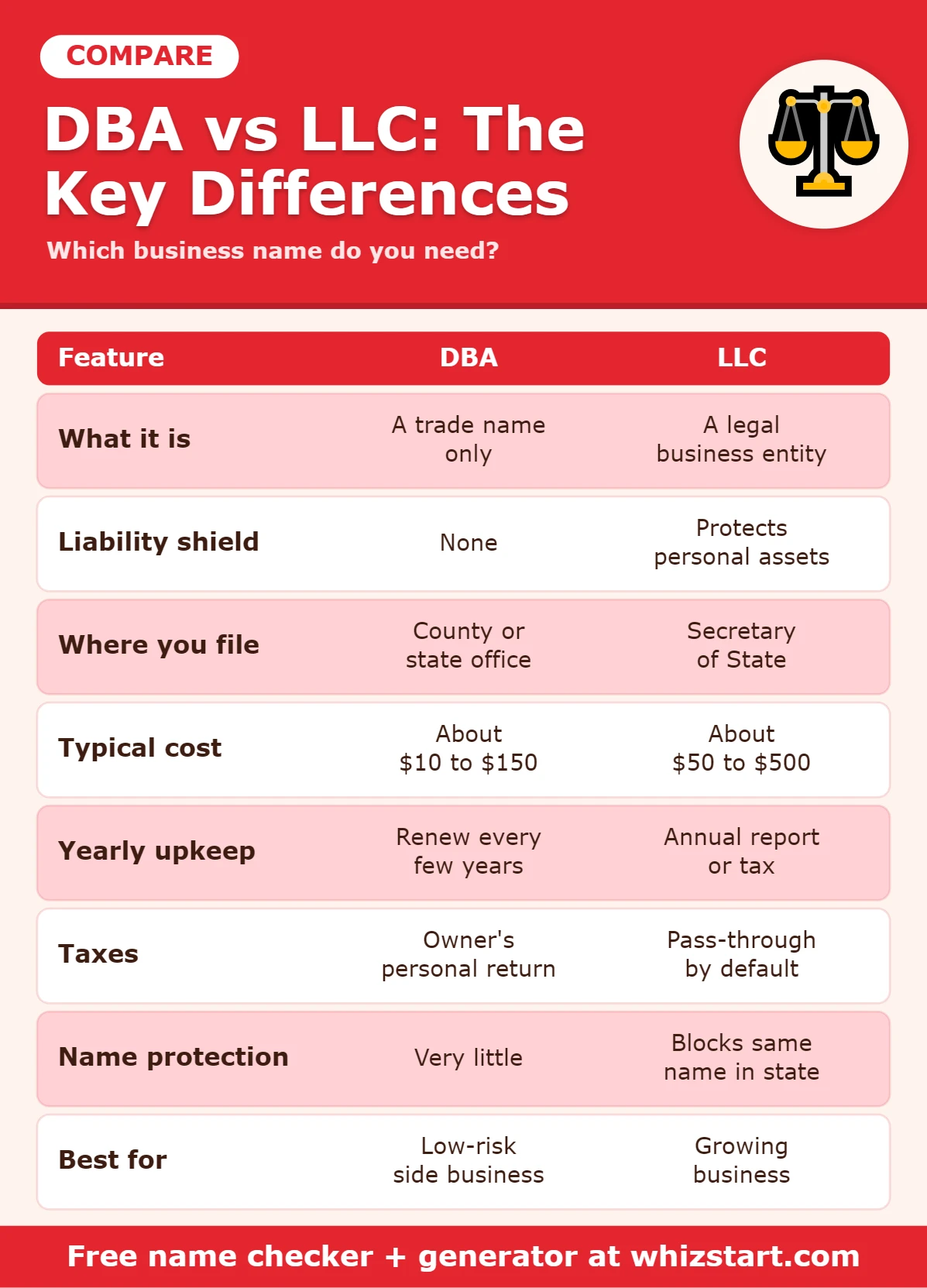
| Feature | DBA | LLC |
|---|---|---|
| What it is | A trade name (also called an assumed or fictitious name) | A separate legal business entity |
| Liability protection | None. You are personally liable | Yes. Protects your personal assets in most cases |
| Where you file | County clerk or state, depending on the state | Secretary of State |
| Typical cost | About $10 to $150 | About $50 to $500 in state fees |
| Yearly upkeep | Renew every 1 to 10 years in many states | Annual report or annual tax in most states |
| Taxes | Reported on the owner’s personal return | Pass-through by default; can choose S corp tax |
| Name protection | Very little | Blocks the same entity name in your state |
| Credibility | Looks like a brand | “LLC” signals a formal business |
What Is a DBA?
A DBA is a registered name that a person or company uses instead of its legal name. If Maria Lopez runs a cleaning business called “Sparkle Home Cleaning”, she files a DBA so customers, banks and the government know Maria is behind that name. A DBA does not create a new business. The owner and the business are still the same person, with the same taxes and the same risks. For the full basics, read what a DBA name is.
What Is an LLC?
An LLC is a business you form by filing Articles of Organization (called a Certificate of Formation in some states) with the Secretary of State. The LLC is legally separate from its owners, called members. If the LLC owes money or is sued, the members’ personal assets are usually protected. Its name must end with “LLC” or “Limited Liability Company” and must be different from other entity names in the state. Before you file, run a state search like our Georgia business name search guide shows.
When to Choose a DBA, an LLC or Both
The right choice depends on your risk, your budget and how you plan to grow.
Choose a DBA If…
- You are a sole proprietor testing a small, low-risk idea.
- You want a brand name on your bank account and invoices without forming a company.
- You want the lowest cost and almost no paperwork.
Choose an LLC If…
- You sign contracts, rent space, hire staff or work in customers’ homes.
- A mistake or accident could lead to a lawsuit.
- You want to look more established to clients, lenders and suppliers.
- You want tax choices, like being taxed as an S corporation later.
Use Both: An LLC With a DBA
An LLC can file a DBA to trade under another name. This is common when one company runs several brands. “Lopez Services LLC” could file DBAs for “Sparkle Home Cleaning” and “Sparkle Office Care”. You get the LLC’s protection and the freedom of extra brand names, without forming a new LLC for each one.
How to Register a DBA or an LLC
Both start with the same step: choose a name and make sure it is free. Search your state registry, USPTO trademarks, county DBA records and the domain name first.
How to File a DBA
- Find where to file. Most states use the county clerk; some use the Secretary of State.
- Search the name in the DBA records and the state entity list.
- File the form (often called an assumed name or fictitious business name statement) and pay the fee.
- Publish a notice in a local newspaper if your state requires it.
- Renew it before it expires.
How to Form an LLC
- Pick a name with “LLC” at the end that is free in your state.
- Choose a registered agent with a physical address in the state.
- File Articles of Organization with the Secretary of State and pay the fee.
- Write an operating agreement and get an EIN from the IRS (free).
- Keep it in good standing by filing annual reports or taxes on time.
Common Mistakes to Avoid
- Thinking a DBA protects you. It does not. Only a legal entity like an LLC or corporation does.
- Using a DBA name that is a trademark. A DBA filing does not give you rights to someone else’s brand.
- Mixing money. An LLC’s protection can be weakened if you mix personal and business funds.
- Forgetting renewals and reports. Missed filings can cancel a DBA or dissolve an LLC.
- Using an LLC brand name without a DBA. If your LLC trades under a different name, file a DBA for it.
FAQs About DBA vs LLC
What Is the Main Difference Between a DBA and an LLC?
A DBA is only a trade name that lets you do business under a different name. An LLC is a separate legal entity that protects your personal assets from business debts and lawsuits.
Is a DBA Cheaper Than an LLC?
Yes. A DBA usually costs about $10 to $150 to file, while forming an LLC costs about $50 to $500 in state fees, plus yearly reports or taxes in many states.
Do I Need a DBA If I Have an LLC?
Only if your LLC will trade under a name that is different from its legal name. For example, “Smith Ventures LLC” selling as “Sunrise Bakery” needs a DBA for Sunrise Bakery.
Does a DBA Protect My Personal Assets?
No. A DBA gives no liability protection. If the business is sued or owes money, your personal savings, car and home can be at risk.
Can I Switch from a DBA to an LLC Later?
Yes. You can form an LLC with the same name if it is free in your state, move your bank account and contracts to the LLC, and cancel or re-file the DBA under the LLC.
Which Is Better for a Small Business, a DBA or an LLC?
A DBA suits a low-risk side business testing an idea. An LLC is usually better once you have clients, contracts, employees or any real risk of being sued.
More business naming guides:
- How to Check If a Business Name Is Taken
- Delaware Business Name Search
- What Is a DBA Name?
- Georgia Business Name Search
- Business Name Checker
- Business Name Generator

Osama Mukhtar
I’ve been creating SEO-focused, user-first content since college, helping readers find practical information, ideas, and solutions through clear and engaging blog content. I’ve also worked with 5+ clients, helping improve their organic traffic by up to 10K monthly visits while strengthening trust and visibility among their audiences.
My specialty is creating unique and catchy business name ideas and slogans for brands and startups. I also create engaging captions, advertising copy, and other content designed to attract attention and connect with the right audience.